


Softwashing Versus Pressure Washing in Memorial Houston

A lot of exterior cleaning damage starts with good intentions. A homeowner sees black streaks on the roof or green buildup on the siding, rents a machine, turns up the pressure, and ends up stripping paint, gouging wood, or forcing water where it should never go. That is exactly why softwashing versus pressure washing in Memorial Houston matters. In a humid Houston climate, the right cleaning method is not just about appearance. It is about protecting your home, your surfaces, and the money you have invested in them.
Memorial Houston homes deal with a steady mix of heat, moisture, pollen, algae, mildew, and road grime. Those conditions make regular exterior cleaning necessary, but they also make surface choice critical. Not every stain should be blasted away with high pressure, and not every surface needs the same treatment. When the method matches the material, you get a cleaner result that lasts longer and causes less wear.
Softwashing Versus Pressure Washing in Memorial Houston
The simplest way to understand the difference is this: pressure washing relies mainly on the force of water, while soft washing relies mainly on specialized cleaning solutions and low-pressure application.
Pressure washing is best for hard, durable surfaces that can handle stronger force. Think concrete driveways, walkways, some stone surfaces, and certain heavy-duty commercial areas. It is highly effective at breaking up packed dirt, surface stains, mud, and grime that has bonded to tough materials.
Soft washing is designed for more delicate or finish-sensitive surfaces. It uses low pressure along with cleaning agents that target algae, mold, mildew, and organic staining at the source. That makes it the safer choice for roofs, painted siding, stucco, fences, wood surfaces, and many exterior wall materials.
For many properties in Memorial, both methods are useful. The real question is not which one is better overall. It is which one is better for the exact surface being cleaned.
Why Memorial Houston Properties Need the Right Method
Memorial Houston is known for attractive homes, established neighborhoods, mature trees, and strong curb appeal expectations. Those same features can create exterior maintenance issues. Shade from tree cover often holds moisture on siding and roofing longer than expected. Humid conditions help algae and mildew grow faster. Pollen, dust, and storm debris settle into outdoor surfaces and make a clean property look tired sooner.
If a cleaning method is too aggressive, it can shorten the life of exterior materials. If it is too mild for the surface, it may leave behind deep grime or organic growth that returns quickly. A professional assessment matters because the visible stain is only part of the problem. Black streaks on a roof, for example, are usually not just dirt. They are often living growth that needs to be treated, not just rinsed.
Where Pressure Washing Makes Sense
Pressure washing has an important place in exterior maintenance. On the right surfaces, it is fast, effective, and gives a dramatic improvement in appearance.
Concrete driveways in Memorial Houston are a good example. They collect tire marks, mud, mildew, algae, and general discoloration over time. Pressure washing can cut through that buildup and restore a much brighter, cleaner surface. The same is often true for sidewalks, patios, retaining walls, and some pool deck materials, although pool areas require extra care because not all surfaces around a pool respond the same way.
Commercial properties also benefit from pressure washing where there is heavy foot traffic, grease, spills, and built-up grime on hard surfaces. Entryways, loading areas, dumpster pads, and parking sections often need stronger cleaning power than soft washing can provide alone.
That said, pressure washing is not simply about using the highest setting possible. Experienced technicians adjust pressure, nozzle choice, water flow, and distance based on the material. Poor technique can leave lines in concrete, etch decorative surfaces, damage mortar, or create uneven cleaning patterns.
Where Soft Washing Is the Safer Choice
Soft washing is often the better answer when the goal is to clean without stressing the material. This is especially important on surfaces that have coatings, shingles, paint, sealants, or natural fibers that can be damaged by force.
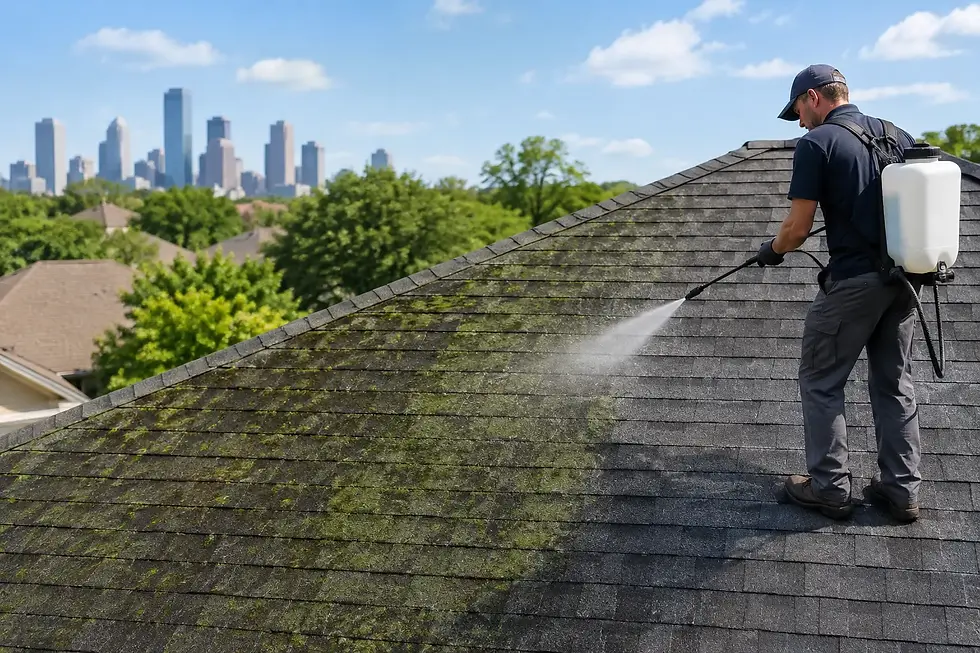
Roof cleaning is one of the clearest examples. Asphalt shingles should not be hit with high pressure. Doing so can loosen granules, reduce shingle life, and create avoidable damage. Soft washing removes the algae and staining that cause those black roof streaks while using a method designed to preserve the roofing material.
House siding is another area where soft washing stands out. Vinyl, painted surfaces, stucco, and fiber cement can all suffer when water is forced behind panels or driven into weak points. Soft washing cleans the surface while reducing the risk of moisture intrusion and finish damage.
It is also the preferred option for fences, wood decks, and other surfaces where appearance depends on keeping the material intact. Wood especially can fuzz, splinter, scar, or lose stain when washed too aggressively. Low-pressure treatment is often the smarter long-term choice.
The Biggest Mistake Property Owners Make
The most common mistake is assuming that visible dirt always calls for more pressure. In reality, many of the ugliest stains on a home are organic. Algae, mildew, mold, and bacteria do not just sit on the surface like dust. They grow into it. High pressure may remove some of the discoloration for the moment, but if the root cause is not treated properly, the problem can return faster.
This is why soft washing often gives a longer-lasting clean on siding and roofs. It addresses the growth itself instead of only blasting off the top layer. For homeowners who care about both appearance and maintenance costs, that difference matters.
Which Method Is Best for Common Exterior Surfaces?
For driveways and most concrete walkways, pressure washing is usually the right fit. For roofs, soft washing is the standard safer option. For siding, it depends on the material, age, condition, and level of buildup, but soft washing is often preferred. For pool decks, the answer depends on whether the surface is textured concrete, stone, pavers, or coated material. For fences and decks, wood generally calls for a gentler approach, while some harder composite or surrounding concrete areas may allow more pressure.
That is why experienced exterior cleaners rarely treat an entire property with one method from start to finish. A good service plan uses the right approach in the right place. One home may need soft washing on the roof and siding, pressure washing on the driveway, and a carefully adjusted process for the patio and pool deck.
Cost, Results, and Long-Term Value
Many property owners focus first on price, which is understandable. But the better question is value. A cheaper cleaning that damages paint, shortens roof life, or leaves organic growth behind is not a savings.
Soft washing can sometimes seem less dramatic because it does not rely on visible blasting power, but on the right surfaces it is often the more protective and more complete method. Pressure washing can deliver immediate visual impact on concrete and masonry, but if it is used where it does not belong, repair costs can outweigh any short-term benefit.
For homes in Memorial Houston, the best value usually comes from a company that understands both methods and knows when to use each one. That balance protects curb appeal today while helping preserve exterior materials over time.
What to Expect From a Professional Evaluation
A professional should look at more than the stain itself. Surface type, age, condition, coatings, drainage, surrounding landscaping, and the source of the buildup all affect the right cleaning plan. A roof with algae staining needs a different process than a driveway with embedded dirt. A painted fence needs different handling than bare concrete. An experienced crew will know the difference before any equipment is turned on.
This is where a local, service-focused company brings real value. Memorial Houston properties are not dealing with generic conditions. They are dealing with Houston humidity, neighborhood appearance standards, and materials that need to hold up through heat, storms, and long growing seasons. Green-go's Hydro-Clean has built its reputation by understanding those local conditions and using the right method for the job instead of forcing one process onto every surface.
If you are looking at stained concrete, streaked roofing, dingy siding, or slippery pool areas, the answer is not to ask whether pressure washing is good or bad. The better question is what your surface actually needs. When the cleaning method matches the material, your property looks better, stays cleaner longer, and avoids the kind of damage that starts with too much pressure and ends with an expensive fix.


Comments