


Will Pressure Washing Harm Your Landscaping?

A freshly cleaned driveway or home exterior should make your property look better, not leave scorched shrubs, flattened flowers, or brown grass behind. So, will pressure washing harm landscaping? It can when the wrong pressure, cleaning solution, runoff control, or technician is involved. Done by a trained exterior cleaning professional, however, pressure washing and soft washing can restore curb appeal while keeping your lawn, beds, and mature plantings protected.
For Memorial Houston homeowners, this matters year-round. Humidity, shade, and frequent rain create ideal conditions for algae, mildew, and organic buildup on siding, concrete, fences, roofs, and pool decks. Cleaning those surfaces is part of responsible exterior maintenance, but your landscaping deserves the same care as the surfaces being washed.
Will Pressure Washing Harm Landscaping? It Depends on the Method
The phrase "pressure washing" covers more than one cleaning approach. A powerful stream is useful for durable concrete driveways and walkways, but it is not the right choice for every surface or every area of a yard. High pressure aimed carelessly near planting beds can strip mulch, compact or displace soil, snap tender stems, and blast leaves off shrubs.
The more common concern is not the water alone. It is what is carried in that water. Cleaning agents used to remove algae, mold, mildew, and stains need to be mixed correctly, applied only where needed, and managed so they do not sit on plant foliage or soak into a concentrated area of soil.
That is why experienced professionals assess the job before starting. A concrete driveway bordered by established turf needs a different plan than a heavily landscaped pool deck, a stucco home with foundation plantings, or a roof surrounded by ornamental beds. The safest process is based on the surface, the contamination, the drainage pattern, and the condition of the landscaping.
Why Soft Washing Is Often Safer Near Plants
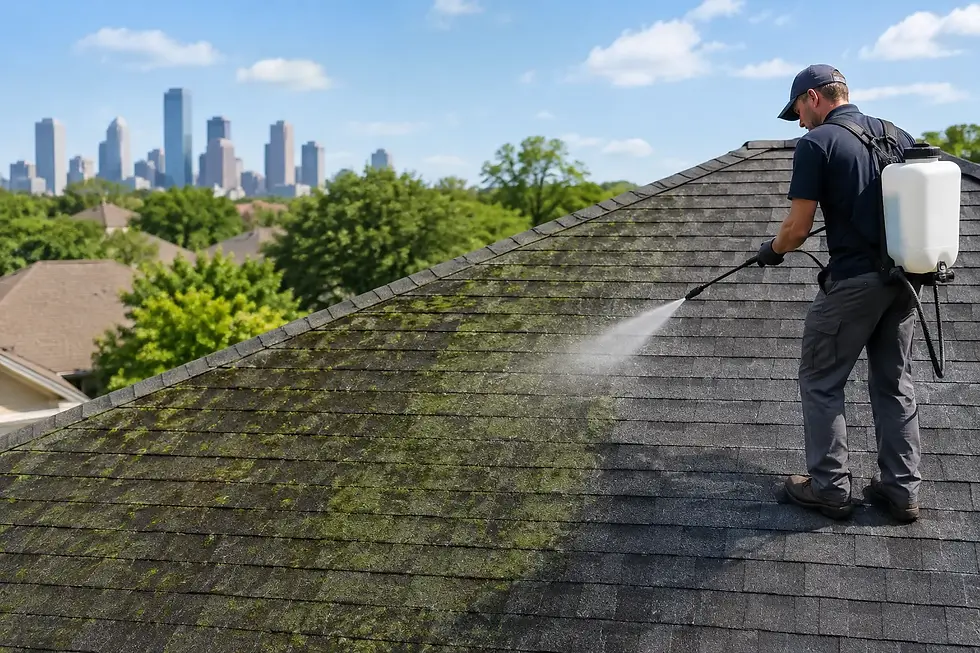
Soft washing is a low-pressure cleaning method designed for delicate exterior materials such as siding, painted surfaces, wood, and roofs. Rather than relying on force to remove organic growth, it uses a surface-appropriate cleaning solution and a controlled rinse.
For landscaping, lower water pressure reduces the risk of physical damage. There is less chance of scattering mulch, exposing roots, tearing leaves, or driving dirty runoff across a flower bed. It also gives the technician more control around foundation plantings, potted flowers, irrigation heads, and landscape lighting.
Soft washing does not mean a crew can ignore plant protection. Proper dilution, targeted application, and thorough rinsing still matter. But when house washing or roof cleaning is needed near shrubs and beds, soft washing is generally the more responsible choice than treating every surface with maximum pressure.
What Can Go Wrong With Inexperienced Cleaning
The damage people worry about is real when exterior cleaning is rushed or treated like a one-size-fits-all job. A rental machine, an untrained operator, or a company focused only on speed can create problems that are expensive to correct.
High pressure can cause immediate visible damage. Mulch may be blown into the lawn, fresh plantings may be uprooted, and delicate groundcover can be shredded. It can also push debris into beds and clog drainage areas, leaving a clean driveway next to a messier landscape.
Chemical exposure can create slower, less obvious issues. Leaves may develop spots or browning when cleaning agents are allowed to dry on them. Repeated concentrated runoff in one area can stress grass and plants, especially during hot Houston weather. Newly installed landscaping and shallow-rooted seasonal flowers are particularly vulnerable.
There is also a property-wide concern. Dirty water should not be allowed to collect near the foundation, flow into a pool, or carry debris into storm drains. A professional cleaning plan accounts for where water will travel before a technician ever pulls the trigger.
How Professionals Protect Landscaping During Washing
A careful crew does not view plants as obstacles. They are part of the property and part of the curb appeal homeowners are paying to protect. At Green-go's Hydro-Clean, that starts with a walkthrough to identify vulnerable areas before exterior cleaning begins.
Pre-Wetting Is a Major Safeguard
Healthy, well-hydrated plants are less likely to absorb cleaning residue than dry plants. Technicians should thoroughly wet surrounding grass, shrubs, trees, and planting beds before applying any solution nearby. This creates a protective layer of clean water on foliage and in the soil.
Pre-wetting is especially useful around boxwoods, hydrangeas, palms, seasonal color, and other common Houston landscape plants that sit close to walls, patios, or driveways. It is not a substitute for careful application, but it is an essential part of a plant-conscious process.
Controlled Application Prevents Overspray
The technician should select the right nozzle, pressure setting, and spray direction for the surface. Cleaning solution belongs on the siding, roof, concrete, or fence being treated - not across the nearest hedge or lawn.
Wind conditions matter, too. On a breezy day, an experienced crew adjusts the work area, changes application techniques, or waits on a sensitive section rather than allowing mist to drift onto plants. That attention may take a little longer, but it protects the appearance and health of the landscape.
Rinsing Happens Throughout the Job
Plants should be rinsed before, during, and after washing when solutions are being used nearby. Continuous rinsing helps prevent residue from drying on leaves and helps dilute any incidental runoff before it becomes concentrated in the soil.
Hardscapes also need a final rinse that sends remaining residue in a controlled direction. Good results are not just about a bright driveway or clean siding. They include a lawn and landscape bed that look just as healthy when the work is complete.
Sensitive Areas Need Extra Planning
Some areas require more than standard precautions. Newly planted beds, vegetable gardens, koi ponds, outdoor kitchens, pools, pet areas, and fragile flowering plants should be identified at the start of the appointment. A professional can protect, avoid, or clean around these areas using a method that fits the situation.
Homeowners should also mention any recent fertilizer, pesticide, or herbicide treatments. Combining chemical treatments with excess water or cleaning runoff can stress plants and create results no one wants.
Different Services Carry Different Landscape Risks
Driveway surface cleaning is usually straightforward because concrete can handle higher pressure. Still, the edges of the driveway often contain turf, mulch beds, and irrigation components. The goal is to lift stains and algae from the concrete without blasting the border of the property.
House washing often involves more plant protection because shrubs and flowers commonly sit against the foundation. Since algae and mildew grow on shaded siding in Houston's humid climate, low-pressure soft washing is often the right approach. It cleans more evenly than aggressive pressure while reducing the risk of surface and landscape damage.
Roof cleaning needs the most deliberate planning. Roof runoff can travel quickly through gutters and downspouts into garden beds. A qualified roof-cleaning crew manages the cleaning process and actively protects the landscaping below, particularly around downspout discharge areas.
Pool decks, fences, and wood decks each have their own considerations. Pool chemicals, nearby drainage, wood sensitivity, and landscaping around the perimeter all affect the right cleaning method. There is no responsible reason to use one pressure setting or one cleaning mix across every part of a property.
Signs Your Landscaping Was Not Properly Protected
Some plant stress can appear shortly after cleaning, while other signs take a few days. Watch for browned leaf edges, pale or spotted leaves, wilting that does not improve after watering, stripped mulch, exposed roots, or unusual dead patches in the lawn near cleaned surfaces.
Not every brown leaf means pressure washing caused the issue. Texas heat, inconsistent irrigation, pests, and seasonal changes can all affect landscaping. But damage that follows the exact line of a recently washed wall, walkway, gutter, or driveway may point to overspray or concentrated runoff.
If a concern appears, rinse the affected plants and soil thoroughly with clean water as soon as possible, then monitor them. The best outcome, though, is avoiding the issue through careful service from the start.
Choose Exterior Cleaning That Protects the Whole Property
A clean exterior should never come at the expense of the landscape that frames it. Ask any pressure washing company how it protects grass, shrubs, mulch beds, roof runoff areas, and irrigation components. Clear answers about soft washing, dilution, pre-wetting, rinsing, and runoff management are a good sign that the company takes ownership of the entire job.
For homeowners in Memorial Houston and nearby communities, the right cleaning team can remove algae, dirt, and mildew while respecting the yard you have invested time and money to maintain. Your driveway, siding, roof, and landscaping should all look cared for when the work is done.


Comments