

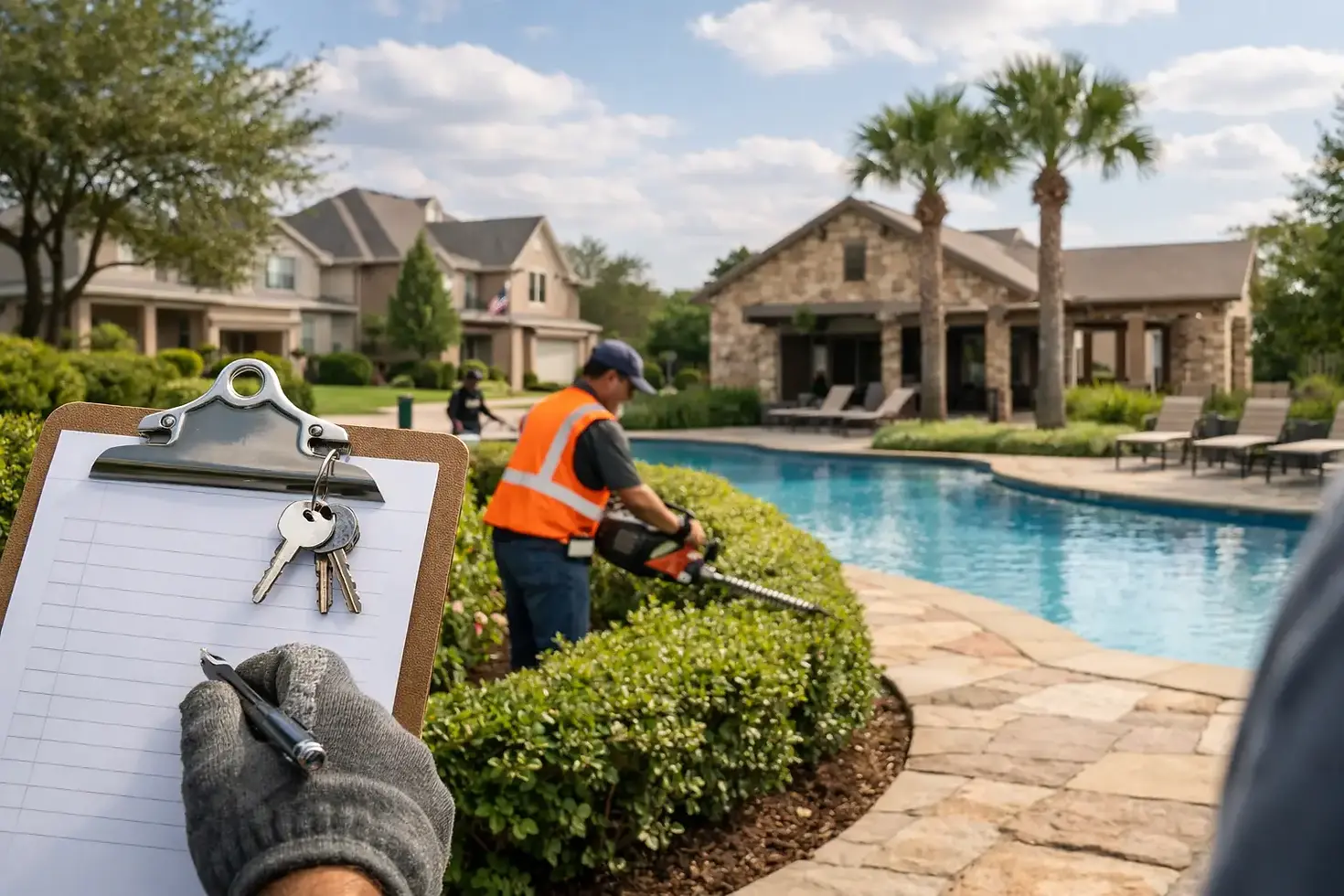
HOA Maintenance Checklist for Houston Communities

A stained entrance monument, blackened sidewalks, or algae-covered pool deck can make an otherwise well-managed neighborhood look neglected fast. In Houston’s heat, humidity, and frequent rain, an HOA maintenance checklist needs to do more than track landscaping and repairs. It needs to account for the exterior surfaces that collect mold, mildew, algae, pollen, and grime between inspections.
For board members and community managers, the goal is not to clean everything constantly. It is to set a dependable maintenance rhythm that protects shared property, supports curb appeal, and prevents small exterior issues from becoming costly complaints or surface damage.
What an HOA Maintenance Checklist Should Cover
A practical HOA maintenance checklist separates routine observations from scheduled professional service. Residents notice the visible details first: driveway entrances, sidewalks, mail centers, fences, retaining walls, pool areas, clubhouses, and common-area buildings. Those are also the surfaces most likely to develop slippery organic buildup in the Houston area.
The checklist should identify each common area, who is responsible for monitoring it, the expected appearance standard, and when a cleaning or repair decision must be made. This gives the board a documented process rather than a last-minute response after resident complaints begin.
A good plan also distinguishes between cosmetic dirt and conditions that need prompt attention. Light dust on a walkway may wait for the next scheduled service. Green algae near a pool gate, black mold on shaded sidewalks, or slick buildup at an entrance should not. Those conditions can affect safety as well as the community’s appearance.
Community Entryways and Signage
Neighborhood entrances set the first impression for residents, guests, prospective buyers, and service providers. Inspect monument signs, brick or stone walls, curbs, decorative gates, sidewalks, and adjacent drive lanes at least monthly. Look for staining beneath irrigation heads, mildew on shaded masonry, tire marks, cobwebs, leaf debris, and faded-looking surfaces caused by accumulated grime.
Exterior cleaning at entry points is often one of the highest-visibility improvements an HOA can make. However, material matters. Pressure that is appropriate for concrete can damage painted signs, older mortar, wood trim, or delicate stone. Soft washing is usually the better approach for surfaces that need a controlled cleaning solution and low-pressure rinse.
Sidewalks, Curbs, and Common Walkways
Concrete may look durable, but it is porous. It holds moisture and organic growth, especially in shaded areas, around drainage points, near irrigation, and beneath trees. Walk common paths monthly and inspect them more closely after long wet periods.
Pay attention to uneven discoloration. A dark pathway is not always just dirt. Black or green staining can indicate mold, mildew, algae, or moisture patterns that should be addressed before the surface becomes slippery. Document recurring problem areas so the HOA can evaluate drainage, sprinkler overspray, and tree coverage alongside cleaning needs.
Pool Decks, Clubhouses, and Recreation Areas
Pool decks demand a higher standard because residents walk barefoot and wet surfaces can become hazardous. Inspect decks, patio furniture areas, pool gates, restroom exteriors, shade structures, fences, and nearby sidewalks weekly during pool season. Remove loose debris promptly, then schedule professional cleaning when visible buildup begins to affect traction or appearance.
Clubhouse walls, covered patios, and outdoor kitchens can also develop mildew where ventilation is limited. The right method depends on the surface. Concrete and many hardscape areas may need professional surface cleaning, while painted siding, stucco, vinyl, and trim should be treated with a surface-safe soft wash process.
Fences, Wood Features, and Retaining Walls
Wood fences, gates, pergolas, benches, and decks need regular attention because aggressive washing can scar the material or force water into vulnerable areas. Inspect for gray weathering, mildew, algae, peeling coatings, loose boards, and moisture damage. Cleaning can restore the appearance of wood, but it should be done at an appropriate pressure and followed by any needed sealing or repair plan.
Retaining walls and perimeter fencing also deserve a seasonal inspection. Streaking, organic growth, and accumulated dirt can make these large features look worn long before they actually need replacement. A thoughtful cleaning schedule can extend the useful appearance of the material and delay unnecessary cosmetic projects.
A Seasonal HOA Maintenance Checklist for Houston
Houston weather does not follow a neat four-season maintenance calendar. Rain, humidity, pollen, heat, and storm debris can overlap. Still, organizing responsibilities by season helps boards plan budgets and avoid rushed decisions.
Spring: Reset After Pollen and Rain
Spring is a smart time to inspect entrances, sidewalks, roofs visible from common areas, pool decks, fencing, and clubhouse exteriors. Pollen can coat surfaces quickly, while rain keeps organic growth active. Confirm that gutters and drains around HOA buildings are clear, and note any staining caused by overflow or irrigation.
This is also a good time to schedule cleaning before pool activity and spring events increase. Waiting until surfaces are heavily stained can make the property look behind on upkeep during one of the busiest times of year.
Summer: Focus on Safety and High-Traffic Areas
Summer heat and moisture make algae and mildew especially persistent. Inspect pool decks, shaded sidewalks, mail kiosks, playground paths, and entry drives more frequently. Watch for sprinkler overspray that leaves consistent green or black growth on curbs, walls, and pavement.
Summer cleaning priorities should focus on surfaces residents use every day. A clean pool area and safe walkway matter more than tackling every low-visibility surface at once. If the budget is limited, prioritize safety, entrances, and highly traveled common areas first.
Fall: Remove Debris and Prepare for Events
Falling leaves, seed pods, and storm debris collect in corners, drains, and along fence lines. Check common areas after major weather events, especially where debris may block drainage or trap moisture against structures. Exterior washing in fall can also prepare entrance features and clubhouse spaces for holiday gatherings and year-end inspections.
Winter: Review Conditions and Plan Ahead
Winter is often the best time to review service records, resident feedback, vendor performance, and recurring trouble spots. Walk the property with a written inspection sheet and photograph areas that need attention in the coming year. This creates a clearer scope for cleaning and repair quotes when spring approaches.
When Professional Exterior Cleaning Is the Right Call
There is a difference between routine groundskeeping and proper exterior surface cleaning. Leaf pickup, basic litter removal, and light sweeping can be handled through regular maintenance. Mold, algae, mildew, embedded grime, oil staining, and widespread concrete discoloration usually require commercial-grade equipment, experienced technicians, and the right cleaning method for the material.
Pressure washing is effective for durable concrete surfaces such as sidewalks, drive lanes, and many pool decks when performed correctly. Soft washing is designed for more delicate surfaces, including roofs, siding, painted exteriors, stucco, and certain fence materials. Using excessive pressure in the wrong place can etch concrete, strip paint, damage wood fibers, or force water where it does not belong.
For HOAs, professional cleaning also improves consistency. Instead of treating one complaint at a time, the board can establish a visible standard for common areas and schedule service around inspections, seasonal demand, and community events. Green-go’s Hydro-Clean provides surface-specific pressure washing and soft washing for Houston-area communities that want clean results without unnecessary risk to property surfaces.
Build Accountability Into the Plan
A checklist only works if someone owns each step. Assign a board member, community manager, maintenance coordinator, or property committee to complete scheduled walkthroughs and track findings. Keep brief records of the date, location, condition, photo documentation, recommended action, and completion date.
For recurring exterior cleaning, set clear expectations with the service provider. The scope should identify the exact areas to be cleaned, the surfaces that require soft washing, access needs, water availability, resident notice requirements, and any areas that must be protected. If a vendor gives one price for “washing the property” without a defined scope, the HOA may end up with inconsistent results or unexpected exclusions.
The most useful HOA maintenance checklist is one your community can follow without guesswork. When entrances stay clean, walkways stay safe, and shared spaces receive attention before buildup gets heavy, residents see the difference every time they come home.


Comments