

Does Soft Washing Damage Shingles?

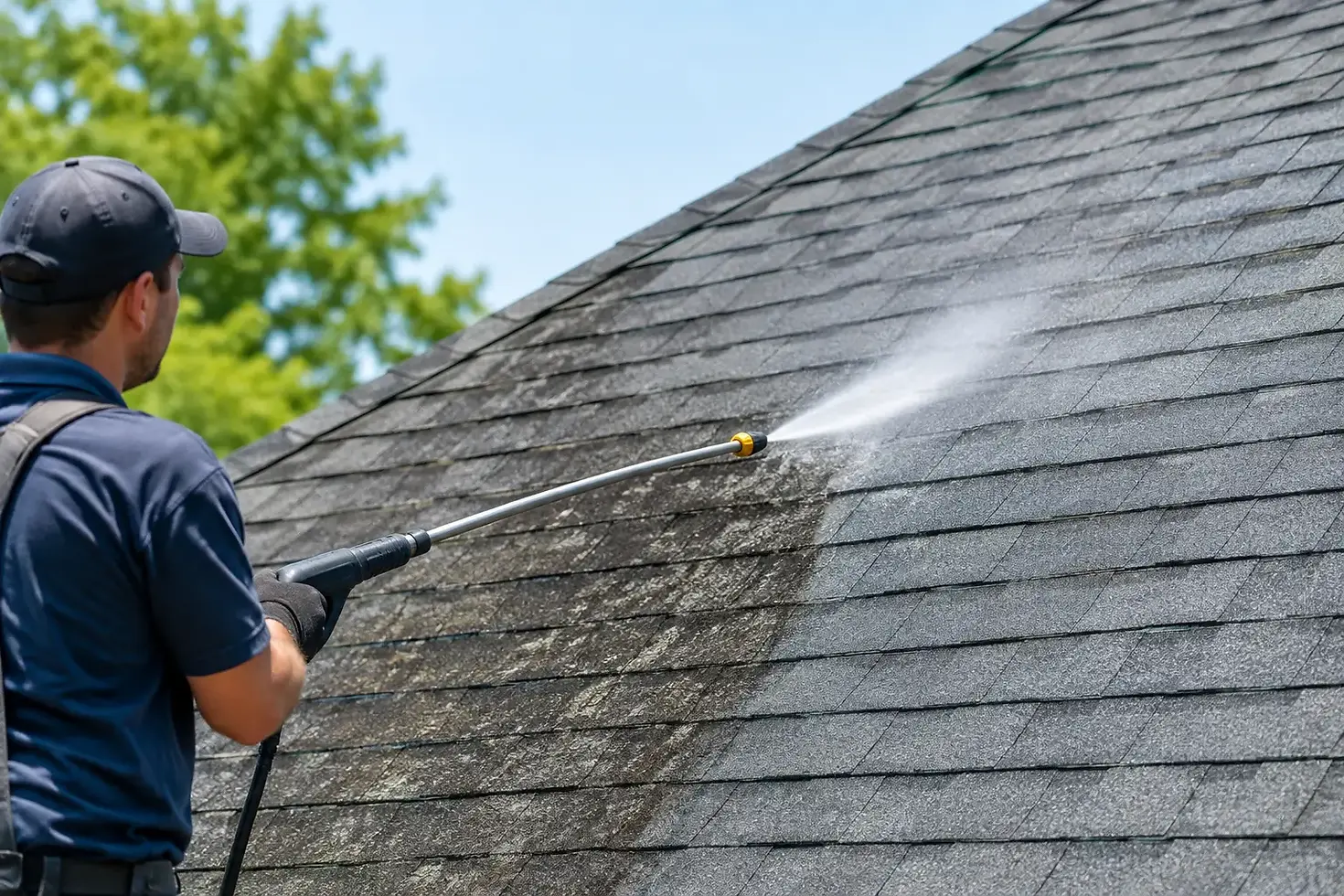
Black roof streaks can make an otherwise well-kept Memorial-area home look older than it is. They are usually algae, not dirt, and they will not come off safely with a blast from a pressure washer. So, does soft washing damage shingles? Proper soft washing should not damage a sound asphalt shingle roof. In fact, it is the preferred cleaning approach when it is performed with low pressure, the right solution strength, and careful protection of the property below.
The key word is proper. A roof is not a driveway, and it should never be treated like one. High-pressure cleaning can strip protective granules, lift shingle edges, force water beneath the roofing system, and shorten the life of a roof. Professional soft washing works differently: it treats the organic growth causing the stains, then allows the solution to do the cleaning without aggressive water pressure.
Does Soft Washing Damage Shingles When Done Correctly?
No, not when the process is matched to the roof's condition and carried out by a trained exterior cleaning professional. Asphalt shingles are coated with small mineral granules that protect the roof from sunlight and weather. Those granules naturally shed over time, especially on older roofs, but they should not be scrubbed or pressure-washed away.
Soft washing uses a controlled, low-pressure application - usually closer to the pressure from a garden hose than a pressure washer. The cleaning solution is designed to kill algae, mildew, moss, and lichen at the source. Instead of trying to mechanically blast stains off the roof, the technician applies the solution evenly and lets it break down the growth. The roof is then rinsed gently when needed, or natural rainfall completes the final rinse depending on the material and treatment plan.
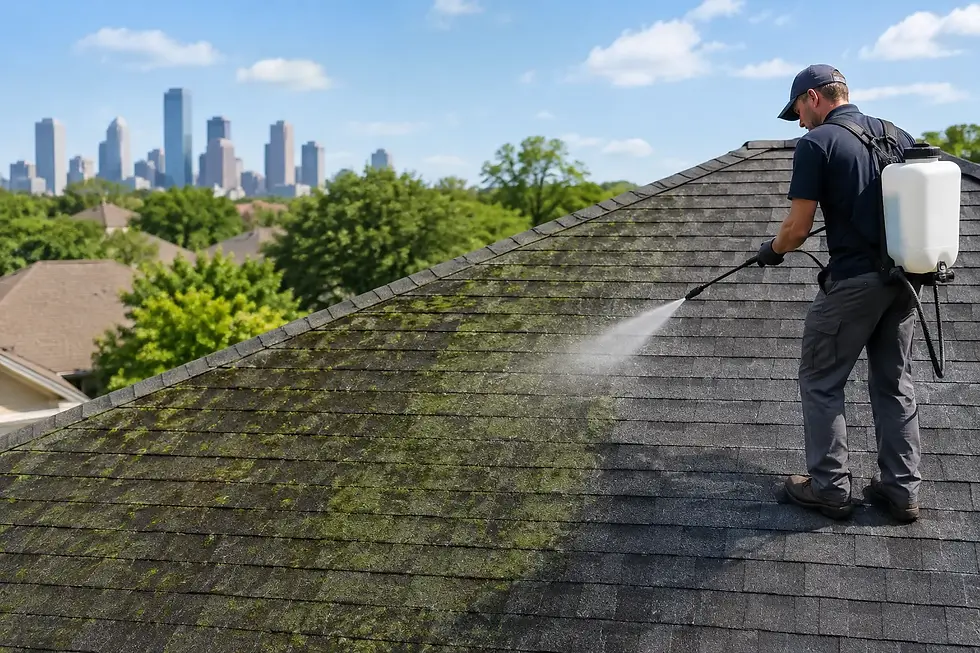
That difference matters in Houston's humid climate. Our warm temperatures and frequent moisture create ideal conditions for algae growth. The dark streaks commonly seen on roofs are often Gloeocapsa magma, a type of algae that feeds on the limestone filler found in many asphalt shingles. Washing only the surface may make the roof look better briefly, but it does not solve the underlying growth. A proper soft wash does.
What Actually Damages a Shingle Roof?
Roof cleaning gets a bad reputation when the wrong method is used. The damage usually comes from excessive pressure, harsh handling, poor chemical control, or cleaning a roof that is already near the end of its useful life.
High pressure is the biggest concern. It can loosen granules and expose the asphalt layer beneath them. It may also push water under shingles, especially around valleys, vents, flashing, and older seals. A roof can look clean immediately after pressure washing while carrying hidden damage that later shows up as leaks or premature wear.
Aggressive brushing is another problem. Moss and lichen may attach firmly to shingles, but scraping them off can pull granules loose. A trained professional treats this growth so it releases gradually rather than forcing it off. Some heavier lichen spots may take more time to fade after treatment, which is safer than damaging the shingle surface to create an instant cosmetic result.
Chemical misuse can also cause trouble. A roof-cleaning solution that is too strong, left on too long, or allowed to dry without management can affect surrounding landscaping and exterior finishes. That is why preparation matters as much as the application itself. Plants should be thoroughly pre-wet, protected as needed, and rinsed throughout the service. Gutters, downspouts, metal fixtures, and nearby surfaces require attention too.
A Safe Soft Washing Process for Houston Roofs
A responsible roof wash begins with an inspection, not a spray wand. The cleaner should look for loose or missing shingles, cracked tiles, deteriorated flashing, active leaks, soft spots, and excessive granule loss. Cleaning will not repair a failing roof. If the roof is in poor condition, a homeowner may need a roofing evaluation before any cleaning is considered.
For a roof that is structurally sound, the process should be deliberate. The technician identifies the growth, chooses an appropriate roof-safe solution, and applies it at low pressure in manageable sections. Landscaping is saturated with water before treatment and continually rinsed during the job to minimize exposure. Runoff is monitored, and care is taken around pools, patios, painted surfaces, and sensitive plants.
The goal is not to make the roof look like it was power-washed. The goal is to eliminate the algae and organic staining while preserving the shingle granules and roof system. Results are often visible quickly, though stubborn organic growth can continue lightening over the following days or weeks. That slower finish is often a sign the roof was treated safely rather than aggressively.
When Soft Washing May Not Be the Right Choice
Soft washing is a strong option for most asphalt shingle roofs with algae staining, but every roof deserves an individual assessment. A roof with severe age-related wear, widespread granule loss, curled shingles, exposed nail heads, or existing leaks may be too fragile for cleaning. In those cases, cleaning can make underlying issues more noticeable, even if it did not cause them.
Newer roofs also deserve special care. Some manufacturers have cleaning recommendations and warranty requirements that should be followed. A qualified cleaner should use methods that align with the roofing material and avoid making promises that conflict with the roof manufacturer's guidance.
Metal, tile, slate, and cedar roofs each have different needs as well. The same cleaning chemistry, dwell time, and rinse approach should not be assumed for every surface. This is one reason hiring a roof-specific soft washing provider matters more than hiring someone who only cleans concrete.
Why DIY Roof Washing Carries More Risk
Many homeowners see algae stains and assume a rented pressure washer is the quickest fix. On a roof, that is usually the costly choice. Beyond the risk of stripping shingles, working on a wet roof brings a serious fall hazard. There is also the challenge of mixing cleaning products correctly, managing runoff, and preventing damage to plants or exterior finishes.
DIY attempts often fail in one of two ways: the roof is hit too hard with pressure, or the cleaner uses an ineffective solution that only masks the stain. Either route can leave homeowners with more work, more expense, and an unchanged algae problem.
A professional roof cleaning service brings low-pressure equipment, proven processes, and the experience to recognize when a roof should not be cleaned. At Green-go's Hydro-Clean, that careful approach is part of protecting the homes and curb appeal our neighbors count on throughout Memorial Houston and surrounding communities.
How Often Should Shingles Be Soft Washed?
There is no one schedule for every home. Roofs under large trees, near shaded areas, or exposed to regular moisture usually develop algae faster. In the Houston area, many homeowners benefit from inspecting their roof annually and arranging cleaning when dark streaks or green growth first become noticeable.
Cleaning early is generally easier on the roof than waiting until moss or lichen has established a heavy hold. It also helps maintain the clean, cared-for appearance that matters in HOA neighborhoods and when preparing a property for sale. Still, a roof does not need to be cleaned simply because a calendar says so. Condition should guide the decision.
If you are seeing black streaks, green patches, or moss along the shaded side of your roof, do not assume replacement is the only answer. A careful assessment can tell you whether professional soft washing is an appropriate way to restore the roof's appearance while respecting the shingles that protect your home.


Comments