


Best Driveway Cleaning Methods for Houston Homes

A driveway can look clean one week and streaked, spotted, or dull the next in Houston’s heat and humidity. The best driveway cleaning methods address more than surface dirt. They remove the algae, mildew, tire marks, oil residue, and embedded grime that make concrete look neglected and can create slick walking areas around the garage.
For homeowners and property managers in Memorial Houston and nearby communities, the right method depends on the driveway material, the type of staining, and the condition of the concrete. A fast blast of high pressure may look tempting, but used incorrectly, it can leave permanent wand marks, expose aggregate, or push stains deeper into porous surfaces. Professional cleaning is about matching the process to the surface, then rinsing thoroughly for an even result.
Best Driveway Cleaning Methods Start With the Surface
Most residential driveways in the Houston area are poured concrete, but their age and condition vary widely. Newer concrete may have a sealer that needs to be protected. Older concrete can be porous, cracked, or weakened from years of weather, vehicle traffic, and previous harsh cleaning attempts. Pavers, stamped concrete, and decorative coatings require even more care.
Before cleaning begins, a trained technician looks for loose concrete, visible cracks, rust spots, oil drips, tire marks, drainage concerns, and nearby landscaping. This step determines the water pressure, cleaning solution, dwell time, and rinsing approach. It also prevents a common mistake: treating every dark spot as ordinary dirt when it may be organic growth, petroleum residue, or a mineral stain.
A quality service should protect adjoining grass, plants, doors, garage surfaces, and drains. The goal is not simply to make the driveway brighter for an afternoon. It is to clean it evenly without creating damage that is harder and more expensive to correct.
Professional Pressure Washing for Embedded Grime
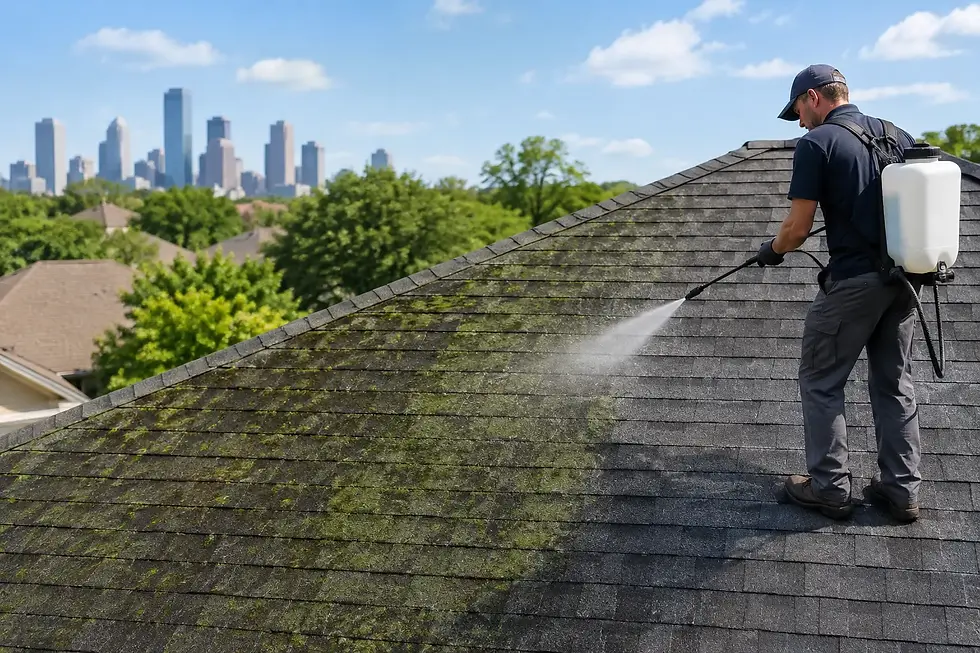
For most concrete driveways, controlled pressure washing is the most effective foundation of the cleaning process. It removes built-up dirt, mud, algae, mildew, pollen, and surface-level vehicle residue that a garden hose cannot touch. In humid Texas weather, organic growth can settle into the tiny pores of concrete and spread across shaded sections near the home, trees, or landscaping.
The difference between professional pressure washing and a rushed DIY job is control. A technician selects the proper pressure level, nozzle, and distance from the surface. Too much pressure or an inconsistent spray pattern can create visible stripes known as tiger striping. Those marks can make a driveway look worse than it did before cleaning.
Professional surface cleaners are especially valuable on broad concrete areas. These tools distribute water evenly beneath a rotating housing, helping create a uniform appearance across the driveway, walkways, and garage apron. Detailed edges and corners are then cleaned carefully, rather than aggressively, to keep the finished surface consistent.
Pressure washing works best for general buildup. It may not fully remove old oil stains, rust, or deeply set tire marks without a targeted pre-treatment. That is why the strongest results usually come from a combined approach rather than pressure alone.
Why High Pressure Is Not Always Better
A driveway is durable, but it is not indestructible. Concrete is porous, and aging concrete can be vulnerable to surface erosion. Blasting one stubborn spot at maximum pressure may remove some discoloration while leaving a lighter etched patch behind.
Experienced cleaners use enough pressure to lift contamination while allowing pre-treatment solutions and proper dwell time to do part of the work. This approach is safer for the concrete and often delivers a more even clean. It also reduces the temptation to repeatedly pass over the same area until damage occurs.
Pretreatment for Algae, Mildew, and Dark Organic Stains
Dark green, black, and brown discoloration is common on Houston driveways, particularly in shaded or slow-draining areas. Much of this staining comes from algae, mildew, mold, leaf tannins, and moisture that remains on the concrete after rain or irrigation. Water pressure can remove the visible layer, but without the right treatment, organic growth may return sooner than expected.
A professional biodegradable cleaning solution can be applied before washing to break down this growth and loosen it from the concrete pores. The solution needs adequate dwell time, followed by controlled cleaning and a thorough rinse. Nearby plants and surrounding surfaces should be pre-wet and protected throughout the process.
This method matters for driveways with recurring black streaks near the garage, along fence lines, or beneath mature trees. It treats the source of the discoloration instead of only skimming the top layer. Results still depend on shade, drainage, and how often the driveway is exposed to organic debris, but pretreatment gives the cleaning a better starting point.
Degreasing Oil and Vehicle Fluid Stains
Oil stains need a different strategy. Motor oil, transmission fluid, and grease bind to concrete, especially when they have been sitting through summer heat. Standard pressure washing may lighten a fresh spill, but it often cannot pull older petroleum stains out of the slab on its own.
A commercial-grade degreaser is applied directly to the affected areas and worked into the stain before rinsing. The product helps emulsify the oil so it can be lifted away more effectively. For severe or long-standing stains, some shadowing can remain because the contamination has penetrated deeply into the concrete. A reputable provider should be clear about that expectation before work begins.
Prompt action gives oil treatment the best chance of success. If a vehicle is leaking, place absorbent material under it and address the source of the leak. Cleaning the driveway without stopping the leak only starts the staining cycle over again.
Rust and Fertilizer Stain Treatment
Orange or reddish-brown stains usually point to rust. They may come from metal patio furniture, irrigation water, fertilizer, batteries, or tools left on the driveway after rain. Rust requires a specialized treatment because aggressive pressure will not dissolve the mineral deposits.
The correct rust remover is chosen based on the surface and stain source, then carefully applied and neutralized or rinsed according to the product requirements. This work should be handled cautiously around decorative concrete, painted surfaces, landscaping, and metal fixtures. A product that works well on plain concrete may not be appropriate for every adjacent material.
Fertilizer stains can be equally stubborn and are often mistaken for ordinary dirt. If the stain is tied to irrigation or repeated lawn treatment, cleaning can improve the appearance, but preventing future overspray is what protects the driveway long term.
Soft Washing Has a Role Around the Driveway
Soft washing is not the main method for cleaning heavy driveway grime, but it plays an important supporting role. The low-pressure approach is ideal for delicate nearby surfaces, such as siding, painted trim, fencing, and certain landscape features that may be affected during a driveway service.
It can also be useful for treating organic buildup in areas where direct high pressure is not appropriate. The key is using the right method in the right location. Concrete may need controlled pressure and surface-cleaning equipment, while the home beside it needs a gentler wash. That surface-specific care helps protect the full curb appeal of the property.
When Driveway Cleaning Should Be Scheduled
For many Houston-area homes, annual driveway cleaning is a practical baseline. Properties under heavy tree cover, with frequent irrigation runoff, or in HOA communities where curb appeal is closely watched may benefit from service every six to nine months. Commercial properties with steady vehicle traffic often need a more frequent maintenance schedule.
There is no need to wait until the concrete turns completely black. Early cleaning is generally easier on the surface because organic growth and stains have less time to settle in. It also helps keep walkways, entry areas, and garage approaches looking cared for before guests arrive, a listing goes live, or an HOA notice appears.
What to Expect From a Professional Driveway Cleaning Service
A dependable driveway cleaning visit should begin with an assessment, not a one-size-fits-all setting on a pressure washer. The crew should identify stains, explain realistic results, protect nearby surfaces, apply appropriate treatments, and use even cleaning passes across the concrete. Final rinsing matters just as much as the initial wash, because leftover residue can leave patchy areas or affect surrounding landscaping.
Green-go’s Hydro-Clean brings a family-owned, eco-conscious approach to driveway surface cleaning throughout Memorial Houston and surrounding communities. With hands-on experience and more than 500 satisfied customers, the focus is straightforward: restore the clean, even appearance of the driveway while treating the property with care.
A clean driveway changes the first impression of the entire property. When the concrete is treated with the right combination of stain removal, controlled pressure, and surface protection, it supports the pride homeowners and property managers already put into everything around it.


Comments